Successive waves of migrant settlers have helped to evolve the special qualities of modern Brick Lane. First, there were the French Huguenots, fleeing persecution for their protestant beliefs. Then arrived the Irish and Jewish communities. Nowadays, Brick Lane is home to a large Bangladeshi population.
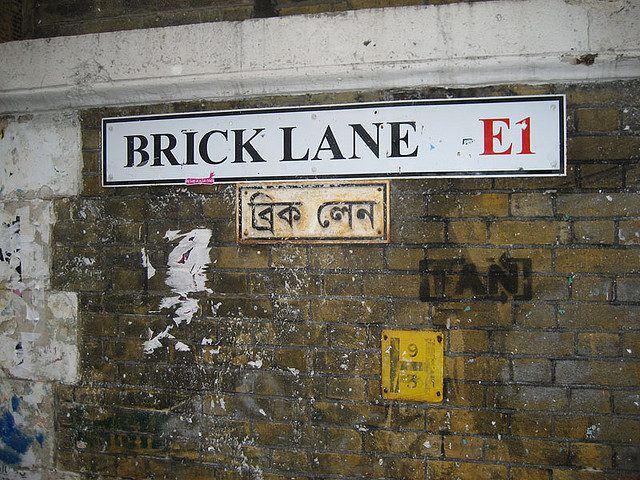
Image CC Flickr
This was never an affluent area of London, its attraction was cheap accommodation close to the city’s heart, along with the prospect of employment in the nearby docks. It was known as a run-down slum area, and the scene of some horrific crimes, possibly attributed to the infamous Jack the Ripper. In more recent times, Brick Lane has undergone a significant revival. It’s now a much safer and friendlier place. The cultural melting-pot of Brick Lane’s past has produced a unique environment that draws a wide variety of visitors, especially those seeking cutting-edge modern culture, and the promise of a good curry.
For shopping, Brick Lane is best known for its Sunday market. This is a somewhat chaotic and eclectic experience. The stalls are extremely varied, it’s often said that you never know what you might find in Brick Lane on a Sunday. Clothing, interesting fabrics, unusual collectables, and all kinds of second-hand goods are all on display. Even if you’re not in the mood to buy, it’s still an engaging experience, and a host of street entertainers all add to the exciting atmosphere. Away from the market, there are many shops, and they’re open throughout the week. Some of these reflect the ethnic mixture of the area, while others cater for enthusiasts of retro and vintage clothing.
Brick Lane started to widen its appeal in the last century when it became an important area for student art and fashion exhibitions. Most of the major schools move the best of their student shows to Brick Lane. There are a number of galleries in the area that specialise in contemporary art, including The Brick Lane Gallery, Stolen Space and The East Gallery. But, Brick Lane is possibly more famous for its street art, or you might call it graffiti. There are some well-known works by artists like Banksy, Ben Eine and D*Face.
The lane also has a vibrant nightlife and cafe culture. This centres on the Old Truman Brewery. Here, you’ll find more places to shop and see art, alongside restaurants, cafes and nightclubs. These include 93 Feet East for music, the Brickhouse which has a 1930s speakeasy supper club theme, and the lively Vibe Bar.
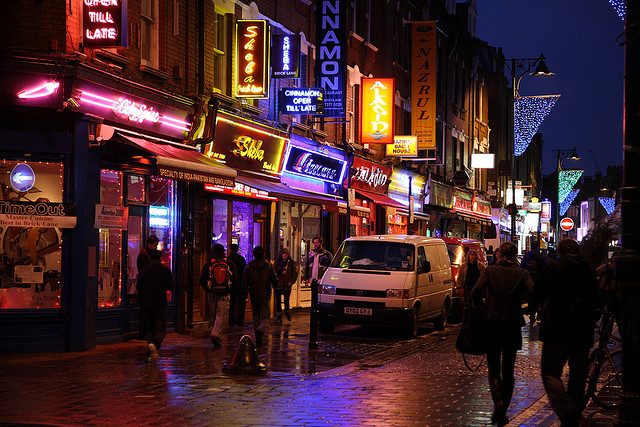
For eating out, Brick Lane’s curry restaurants are far too numerous to mention individually. You’ll have to find one that suits you by just browsing around. There are different price ranges and styles. But, due to the fierce commercial competition that exists between then, standards of quality and value for money are extremely high. Curry is one of the British nation’s favourite dishes, and it was originally brought to us by Bangladeshi restaurant owners and chefs. So, at the end of a busy day’s shopping, gallery hopping and graffiti spotting, treating yourself to a nice curry in Brick Lane seems the right thing to do.
Written by Malcolm who writes for www.londondaytrip.co.uk and enjoys writing about his trips in Spain at www.spanishtravelguide.co.uk